🎲 D&D Modifier Calculator
Instantly calculate 5e ability modifiers, saving throws, skill bonuses & passive scores
| Skill / Save | Ability | Mod | No Prof | With Prof | Expertise (x2) |
|---|
When you sit for play tabletop RPGs as D&D three main mechanics determine almost everything: ability checks, saving throws and attack rolls. All three depend strongly on your six ability scores. The rule here is quite simple: you roll a d20, add the modifier of your ability score, and see whether you reach the target.
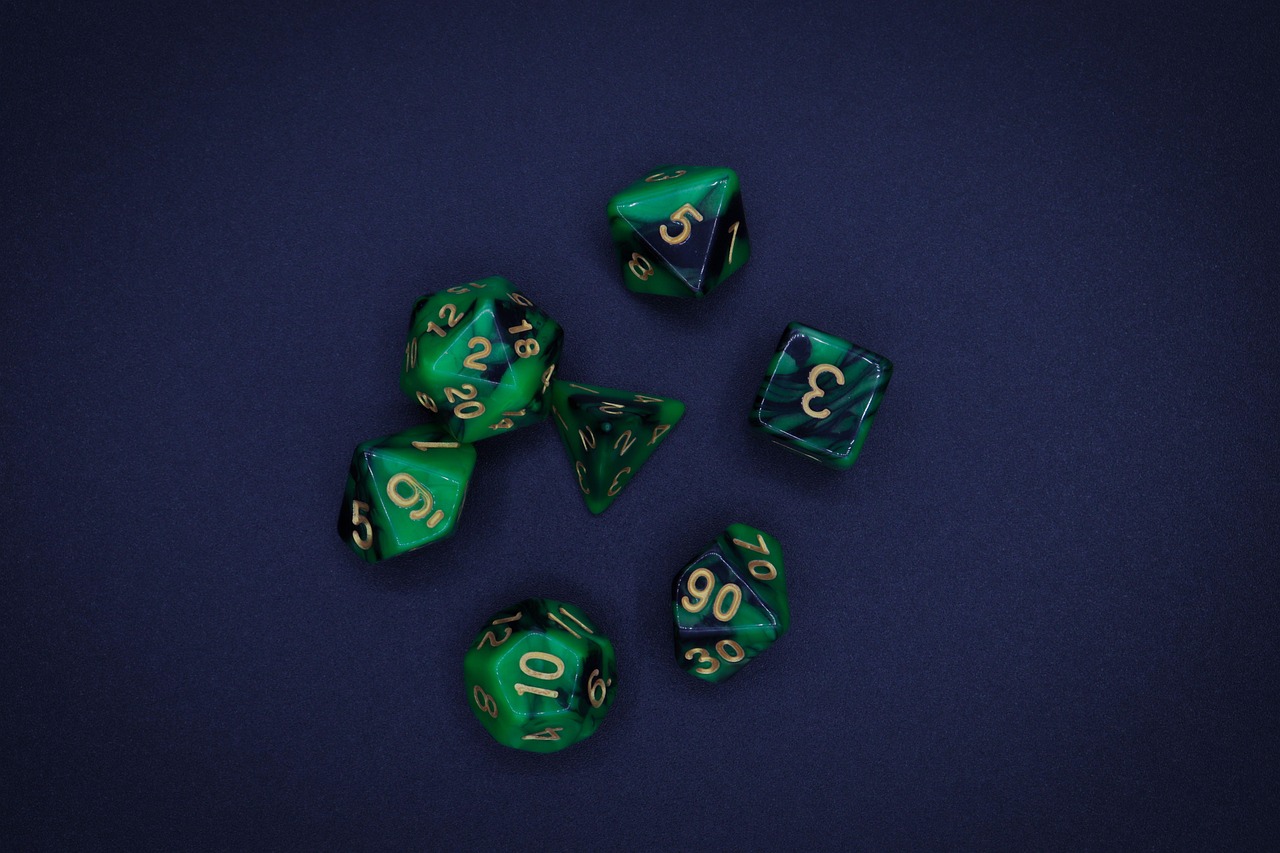
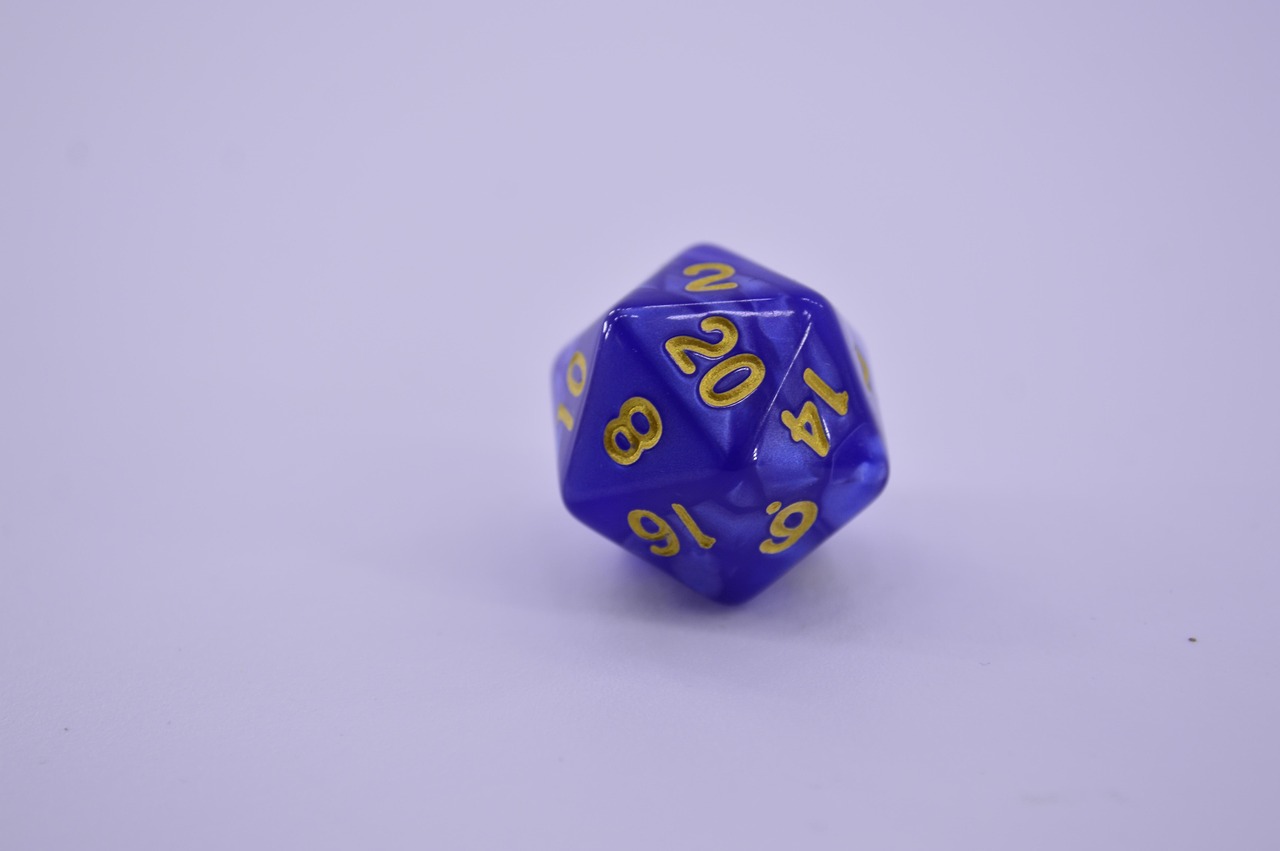
Those modifiers are derived directly from the scores and represent the mechanical “teeth” behind what those numbers indeed mean at the table.
How D&D Ability Scores and Modifiers Work
Every character in the game has six ability scores, that shows how strong, fast, hardy, clever, perceptive or charismatic you are. It matters to notice that ability scores are not only raw talent… They include also your training and how good you became in particular cases.
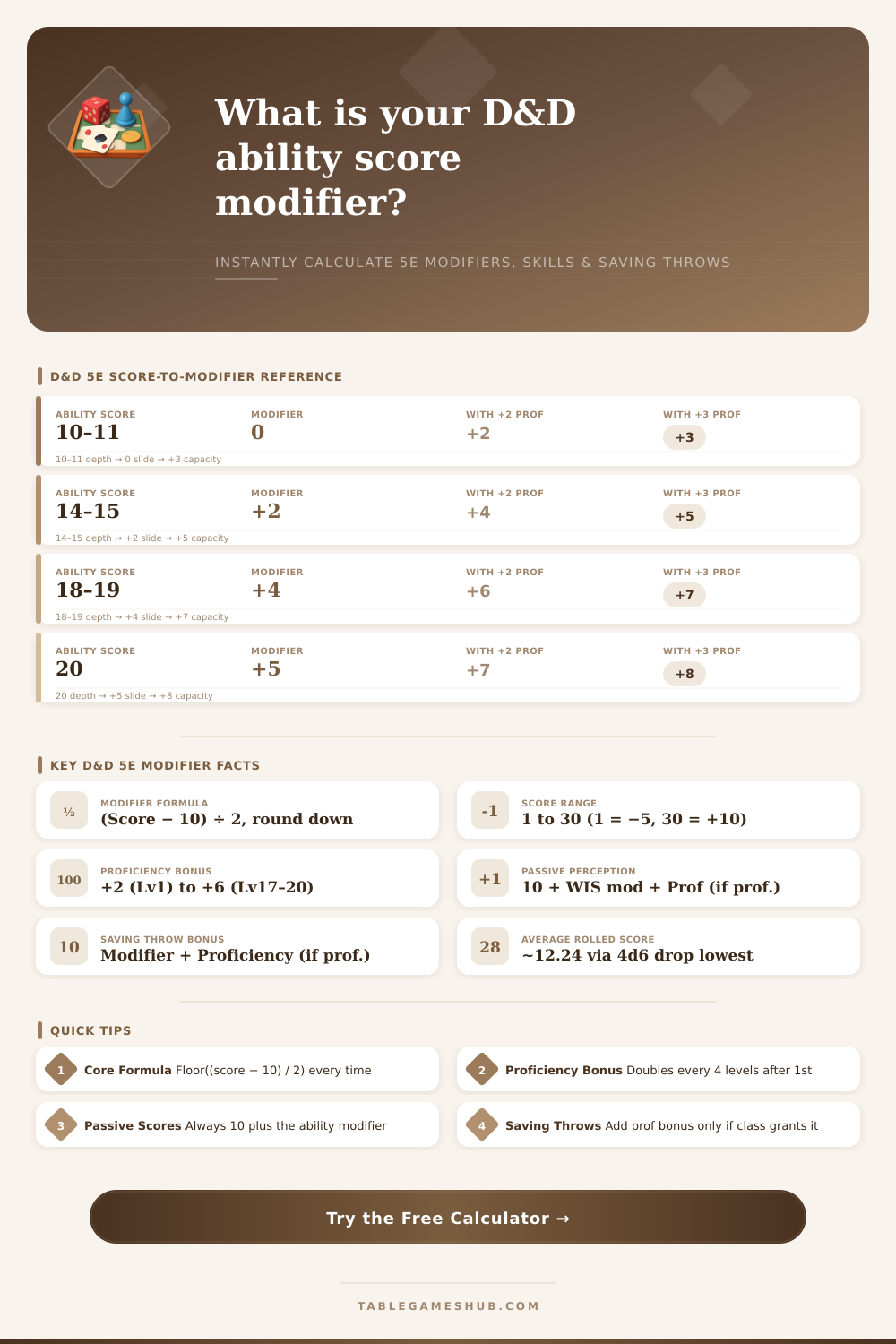
Most characters have scores around 10 or 11, which puts them correctly in the center of the spectrum. A score says how naturally capable you are, but to use it during the game, you convert it in a modfier that you can add or subtract.
Here is the formula if you want to count it without the table: take your ability score, subtract 10, divide the result by 2 and round down. After you rolled or assigned the six scores, you distribute them between Strength, Dexterity, Constitution, Intelligence, Wisdom and Charisma, minding which one your class most requires. When that is decided, you fill the modifiers that flow from every score.
One thing is, that you do not roll to improve your modifiers after the game starts. Rolling happens only during the creation of the character to determine the initial scores. Even so, every class receives what you call Ability Score Improvement at level 4.
Then a player can increase one ability by 2 points or share those 2 points between two various abilities.
When a class ability (as a spell or a rogue’s sneak attack) depends on a particular modifier, you call it the key ability score. For instance, imagine a level-one character with +3 Dexterity modifier who is trained in Stealth, they would add also their proficiency bonus, that at that level is +2, reaching a total of +5 for that check. Fight starts similarly: each does a Dexterity check for initiative, apply their modifier together with any other grants from spells, and then you determine the order of actions from the highest number down.
Most of the time, stacking grants operate well, bonuses from various sources and types add together. But if two grants are of the same type or come from the same source, only the highest counts. The range of 3-18 for ability scores comes from the original game.
When the third edition rolled together with the d20 system, it introduced modifiers as we know them today. That system, where a grant adjusts every two points, appeared first correctly in that edition.