Spades Sandbag Calculator
Score a Spades hand with bid contracts, overtricks, nil bonuses, blind nils, carried bags, bag-out penalties, target pressure, and the next-hand bag buffer.
10 x bid + bags
max(0, tricks - bid)
floor(total bags / limit)
old + hand + nil - penalty
| Profile | Bag limit | Penalty | Best use |
|---|---|---|---|
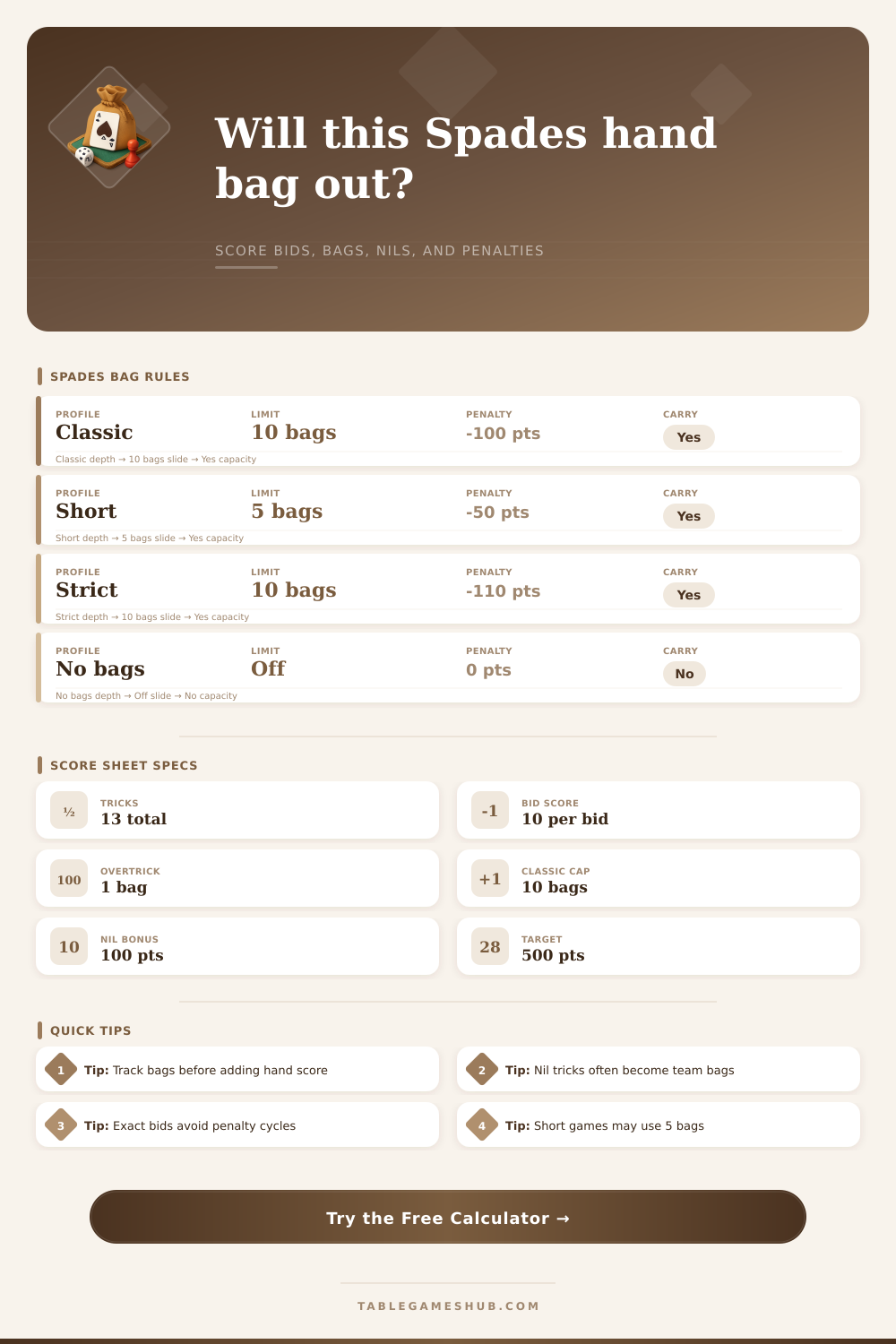
| Classic | 10 bags | -100 | Standard 500-point partnership games |
| Short game | 5 bags | -50 | 200 or 250-point games with faster pressure |
| Strict | 10 bags | -110 | Fully offsets ten 1-point overtricks |
| Soft | 10 bags | -90 | Leaves the ten bag points in the score |
| Bid | Taken | Classic score | Bag result |
|---|---|---|---|
| 5 | 5 | 50 | No new bags |
| 5 | 7 | 52 | Add 2 bags |
| 6 | 5 | -60 | Set, no overtricks |
| 3 | 7 | 34 | Add 4 bags |
| Nil state | Bonus | Failed value | Bag note |
|---|---|---|---|
| Nil made | +100 | -100 | Zero nil tricks |
| Blind nil made | +200 | -200 | Often when trailing |
| Double nil made | +200 | -200 | House rules vary |
| Failed nil tricks | None | Penalty | Often count as bags |
| Current bags | Classic room | Bid posture | Score note |
|---|---|---|---|
| 0 to 3 | Wide | Normal bidding | Overtrick risk is low |
| 4 to 6 | Moderate | Watch loose tricks | One big hand can matter |
| 7 to 8 | Tight | Prefer exact contract | Defensive pressure rises |
| 9 | One bag | Avoid any overtrick | One extra trick bags out |
Your partner bid seven, and there are eight tricks staring at you in the hand. One more is all it takes to send your team across the line. But you have to deal with those bag carries from previous deals and now it’s getting hazy. A hundred point penalty looms large. This is no easy matter.
Enter this handy calculator. This removes all the guesswork so you can decides whether to shoot for the contract or sacrifice a few points to save your score.
Use the Calculator to Avoid Bag Penalties
Bags is usually not considered until suddenly they dissapears, often in a negative point penalty. Sandbags, however, are compounding interest on your error. Every overtrick are added to a running total. When you reach ten overtricks, the game smacks you down hard with a (100 penalty to your score). Ouch! This is especially true if you’re up by only a few points.
Just enter your estimated number of tricks and bag count and let the calc do the math. No more screwing up at crunch time trying to remember how many bags you have or should of had. However, before these numbers help you win, it’s important to know what they show.
Your bid is the combined number of tricks your team promised to collectively take. It doesn’t include any nil bonus that may be floating around the table. The tricks taken field includes all tricks won by both partners. That’s because partnership Spades are a team effort. Even if only one person holds the good cards, and that person eases through their bid effortlessly while the other struggle, the overtricks still count against the team total.
Because each card room has its own flavor of punishment, you can also switch back and forth between them using the tool. While some people play with a soft penalty (deducting nine points), leaving a small buffer for folks who manages to stay just under the wire. On the other end of the spectrum are those who run strict tables: hit ten bags and you lose one-hundred and ten points. In effect, this will cancel out the value of the overtricks themselves. Set it right, and the score will reflect actual stakes at your table instead of some generic online standard.
Nil adds an additional layer of complexity that tends to trip up more casual players. A successful nil rewards you with a hefty bonus; if it fails, there is typically trouble ahead. More importantly though, in many groups the tricks taken on a failed nil are counted as extra bags against the team. That keeps players from being able to call nil just to burn off their high cards with no consequences. The variable for this is also accounted for in the calculator. You can see what effect a failed nil could have on tipping your partner into a penalty cycle they may not have anticipated.
There is a strategic shift that happens around the seven bag mark. You begin to play defense, not just to win a trick, but to avoid losing one. The way you play through the first part of the hand becomes affected by this defensive stance. For example, instead of risking another trick by going up with a mid level spade, you may choose to under trump and live to fight another day. Throwing away points on purpose seems like it would be counterproductive but in many instances keeping your bag buffer intact is far more valuable then the twenty points you gain right now.
Just remember: When you play it safe, they see it. They’ll come out swinging because they know you’re scared of getting too far ahead. It’s a tricky balancing act. You want to be ambitious but cautious at the same time. The reward can be great if you’ve got a good hand, but the price for a penalty could cost you even more later on in the round. So look at what you show and think about whether you want to lay down some low cards now or not. Are you one bag from hell?
Ultimately, this is all about control. Control replaces anxiety with data. When it’s you or him, and you’re thinking “will I blow this by doing one more trick?”. Now you know by how many points you are ahead (or behind). Now you have an equation; the calculator at the top of the page does the math. You don’t just know the score; you also know what each hand mean for the future. You can get a better feel for where you stand in relation to others and where they might go next.
Next time you find yourself sitting there with eight tricks in hand and a partner who has just bid six, remember: Don’t panic. Count the number in the bag. Find the penalty threshold. Base the call based off the evidence, not hope. The cards are going to shuffle the same whether or not you know your numbers, but knowing them keeps the surprise out of the equation.