Hero Realms Ruin Calculator
Estimate a Ruin of Thandar turn by balancing champion health, gold, combat, faction ally triggers, mastery or ruin effects, market pressure, healing, and end-turn damage.
Load a named campaign-style board state, then adjust the eight turn inputs.
| Effect | Combat shift | Gold reach | End risk |
|---|---|---|---|
| No mastery effect | +0 | +0 | Baseline turn |
| Skillful Heist tempo | +0 | +1.5 | Free-buy tempo, no defense help |
| Smooth Heist hand buy | +1 | +2 | Better market conversion |
| Masterful Heist swing | +3 | +3 | Strong burst, low stall risk |
| Ruin scar strain | -1 | +0 | Extra end-turn pressure |
| Master villain pressure | +2 | -1 | Damage race tightens |
| Pressure row | Target gold | Tempo read | Calculator effect |
|---|---|---|---|
| Cheap row | 3 | Fast deck growth | Low pressure, high buy rating |
| Balanced row | 5 | Normal campaign turn | Baseline pressure |
| Heavy row | 7 | Strong cards out of reach | Buy score needs extra gold |
| Champion-clogged row | 6 | Board can stall | Adds clear pressure |
| Fire Gem fallback row | 2 | Emergency conversion | Gold counts, tempo is modest |
| Signal | Strong result | Warning result | Best next check |
|---|---|---|---|
| Champion clear | Combat covers full guard health | Guard remains with 1+ health | Spend combat before face damage |
| Buy window | Gold reach meets row target | Gold trails target by 2+ | Look for Fire Gem fallback |
| Faction allies | Three or more triggers live | Zero or one ally trigger | Check color pairing before math |
| End buffer | Healing covers ruin damage | Negative buffer after damage | Prioritize heal or guard removal |
Clear the guard first: if champion health absorbs the whole combat pool, the face-damage card should read as a blocked turn rather than a weak attack.
Separate healing from pressure: gain health before comparing end-turn damage, then use the buffer result to decide whether the ruin effect is playable.
You sit down to play Hero Realms, all hyped up and ready to clean someone’s clock, only to realize you’re teetering on edge of defeat before you even draw a card. That fear, that’s the problem Hero Realms Ruin calculator solves. It doesn’t just do math; it illustrates the domino effect of changes in tempo, gold, and damage happening during a single turn of the campaign.
Above is the tool. Put in how much health your guard has left, how many cards you have to use in combat and how much pressure you are experiencing in market. Let it do the math for you. Instead of keeping track of eight different things while you try to relax and play game, you know for sure whether you will succeed or not.
How the Hero Realms Ruin Calculator Helps You Win
In most cases this boils down to guard champions. Guard champions is minions who stand between you and the boss to absorb damage meant for you. Without them, you would take damage yourself. To figure out whether or not you have enough combat power to remove guards entirely, the calculator needs to know how much health each one has. And if it says “clear,” you relax, there’s nothing hitting your face. Otherwise, you’re facing a negative buffer. Each time you didn’t block enough to stop that hit, it comes right off your health pool. More then the absolute value of any particular amount here, that makes all the difference.
Another key part of the equation is gold and market pressure. If your economy is shot you can’t just swing your sword around. To that end the tool shows how much market pressure there is which indicate to you if you have enough gold in the pool to realistically purchase the improvements you want. That’s because you can grow your deck pretty fast on a cheap row. But when it’s a heavy one, you are left looking at cards you can’t buy. This basically stops you in your tracks. Your tempo has been stalled out. Adjusting market setting shows your financial situation, meaning you need to decide whether to support or defend. Often that’s why something looks good on paper but isn’t so hot in reality.
Then there’s the whole faction business plus mastery effects. There are bonuses from pairing color on the board, but these bonuses can only come into play when all of their required allies remain livivng. That’s a live trigger, and that’s what the calculator considers in its final decision. Cards that is out of play don’t protect you. Mastery effects like Masterful Heist or Skillful Heist include some targeted changes to gold reach and combat. They aren’t blanket buffs, these effects adjusts how you approach game state itself. Knowing which is up shifts your decision-making between saving resources for healing versus pushing damage.
Your last line of defense is healing. Sure, you bought some good cards and cleared all those guards. But then that villain ability goes off at the end of his turn and he deals 5 damage to you. That’s when healing comes into play. How much healing do you get? How much damage are you expecting? By subtracting one from the other you get your “end buffer.” If it’s positive, you’re stabilizing. If it’s negative, you’re bleeding out slow. For long term survival, this number is often the most critical. Does what I’m doing now work in the long run, or am I digging myself an even bigger hole each turn?
The second thing is that players tend to obsess over combat power but neglect healing and economic layer. Sure, you can kill boss on a single hit, but your buffer is negative and your gold is maxed out, so you’re going to be dead by the time it connects. The page lays out the tradeoffs in clear tables (the reference tables). It shows what each effect does to tip the scales. No need to memorise all the coefficients! Just get an idea for what’s pulling the hardest right now.
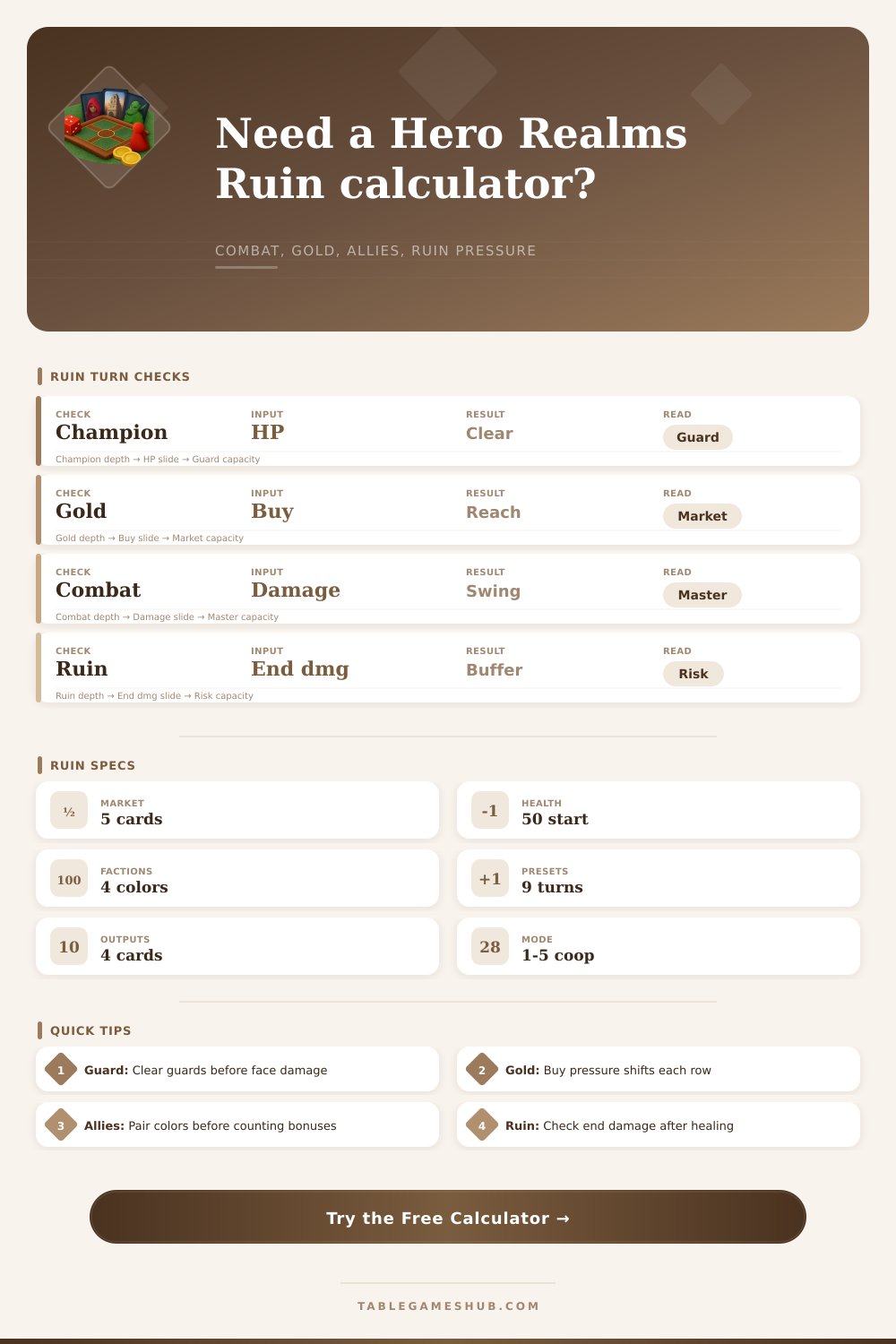
In short, all that complexity of the turn state boils down to four easy-to-read signals: Can I stabilize? Should I buy what I need? Will I clear the board? Am I taking damage? And with those answers in hand, you can make smarter choices when playing game for real. You won’t react to the madness anymore… You’ll be able to manage it. And that’s the bulk of the trick here; once you know what each thing represents, everything starts becoming a lot easier to see your way through. From there, you’re not just guessing at things any more, you’re planning, which is the only way to conquer such an unforgiving campaign.