Archery Draw Weight Calculator
Estimate peak load, holding force, and tuning band for your bow setup.
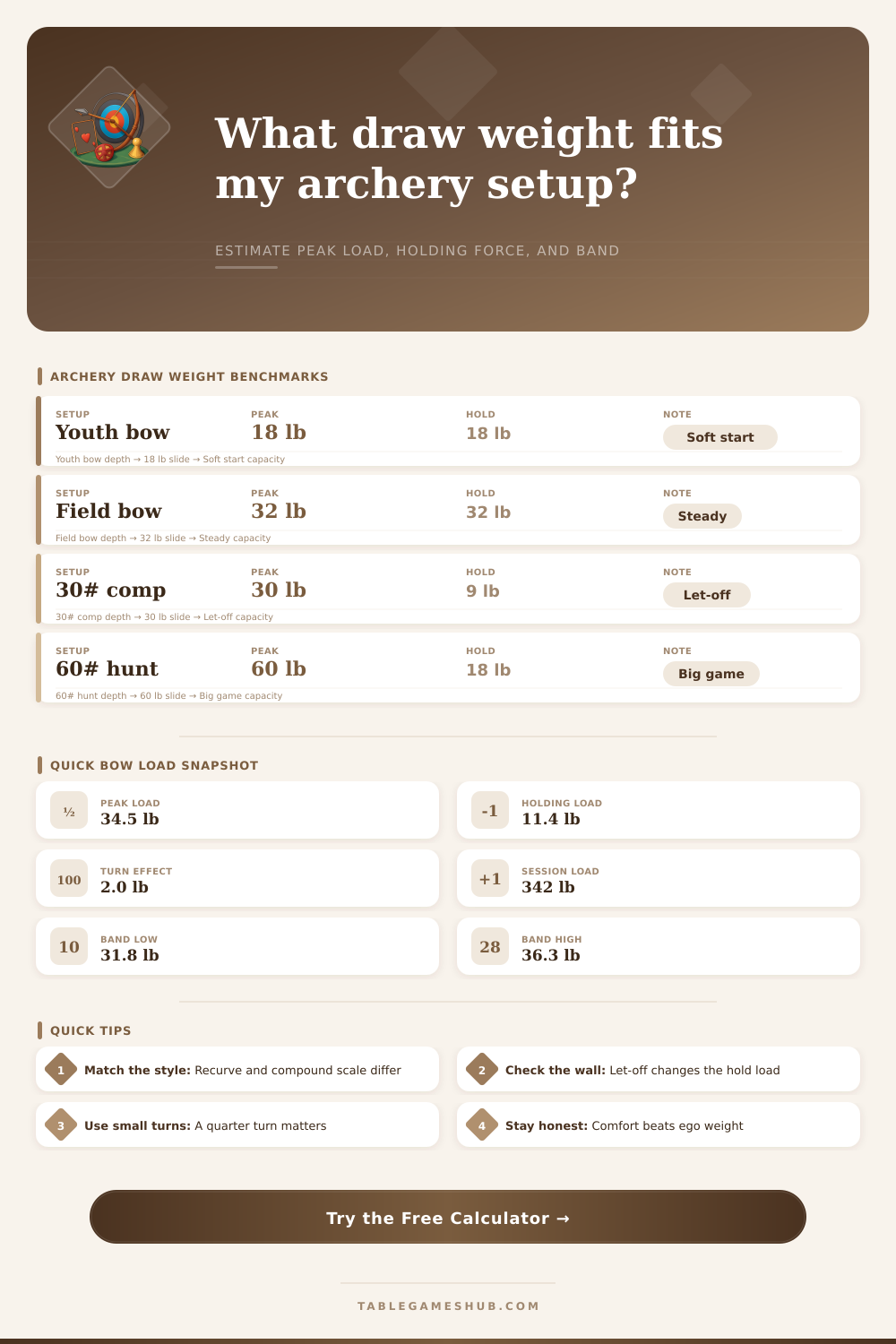
| Bow Style | Rate | Hold | Notes |
|---|
| Turn | Shift | Band | Use |
|---|
| Let-off | Hold % | Feel | Bow Type |
|---|
| Goal | Peak | Hold | Session |
|---|
The draw weight calculator estimates how hard the bow feels at full draw after reference weight, length change, limb turns, and let-off are applied.
It also shows a session load index so we can compare your setup against a realistic practice volume.
Draw weight is the amount of force require to pull a bow to its full draw length. Draw weight is critical in archery because draw weight influence the way in which an archer holds the bow and aim the bow. Using too much draw weight for an archer’s strength will result in fatigue of the muscles use to hold the draw weight.
Fatigue will result in the archer losing there form when shooting arrow. Using a draw weight that is matched correctly to the strength of the archers will allow for stability throughout each shot. The draw weight of many bows can be found on a sticker attached to the limb of the bow.
What Draw Weight Is and How It Affects You
However, the draw weight listed on the sticker is typically the draw weight for a draw length of 28 inch. If an individual have a draw length that is not 28 inches, then their draw weight will change. For example, if an individual pulls a bow for a distance of 29 inches instead than 28 inches, they will pull more pound of draw weight.
Bows will have a draw weight that increases for each inch of drawn arrow because the limbs has to bend further to reach that length. Many bows will have bolts on each limb that allow for an archer to adjust the draw weight. By turning these bolts, the archer will change the draw weight of the bow.
For example, turning the limb bolt a quarter turn may change the draw weight of the bow by a small amount. Using these bolts, an archer can fine-tune the draw weight of the bow to ensure it is set to a draw weight that is consistent with the physical capability of the archer. Bows come in many different type, and each type has a different draw weight.
Recurve bows and longbows has draw weights that increase with the pull of the archer on the bow. Longbows may have a draw weight that increases more slow than recurve bows. Compound bows use cams that allow the bow to let off of the hold weight of the archer on the bow.
If the compound bows has a high percentage of let-off, then the hold weight of the bow will be much lower than the draw weight. A lower hold weight means that an archer will be able to hold the compound bow in its anchor position for a longer period of time. Session load refer to the fatigue that an archer will experience during an archery session.
Session load is not simply the draw weight of the arrows that an archer pull. Session load is the effect that the draw weight have when pulled many times during a session. For example, an archer may be able to pull a 30-pound recurve bow for five arrow.
However, if the archer pulls the same bow for forty arrow, the archer may become very tired. If there is too much session load, the muscle of the archer will tire, and their ability to accurately aim the bow at target will decrease. An archer must choose a draw weight that match their goals and their style in archery.
Archers who compete in archery tournaments may choose draw weights in the mid-range so that they can shoot many arrow without collapsing from fatigue. Archers who go hunting may prefer a higher draw weight to allow the arrow to travel at a higher rate of speed. However, a higher draw weight also means that archers has to hold more weight on their muscle for longer periods of time.
Beginners to archery typically want to start with a lower draw weight so that they can focus on learning proper form without becoming fatigued after just a few shot. The draw weight of an archers bow may also be affected by the draw weight of the arrows. Draw weight may be affected by the temperature of the air in which the archer will be shooting.
Cold weather can change the way that the limbs of the bow act. These change may add or subtract pound from the draw weight. Additionally, draw weight will affect the arrows that an archer use.
If the draw weight is too heavy for the arrows that an archer use, then the arrows may lack the strength to reach as far as the archer desire. In this case, the arrows may fishtail when the arrows are in flight. If an archer use arrows that are too stiff for the draw weight of the bow, the arrows may also suffer in their tuning.
Archers should avoid the mistake of using a draw weight that is too heavy for their ego. Using a draw weight that is too high to appear strong to others can result in bad archery habit that make it difficult for archer to shoot accurately. The best draw weight for an archer will allow them to perform the same action many time without fatigue.
If the draw weight is too heavy for an archer, the archer should adjust the limb bolt on the bow to decrease the draw weight. If the draw weight of the bow is too light for an archer, the archer should adjust the limb bolt to increase the draw weight. By adjusting the draw weight of the bow to the strength of the archer and the goal of that individual, the archer will have a stable anchor and be able to shoot each arrow in the same way.