🎯 Molkky Throwing Distance Calculator
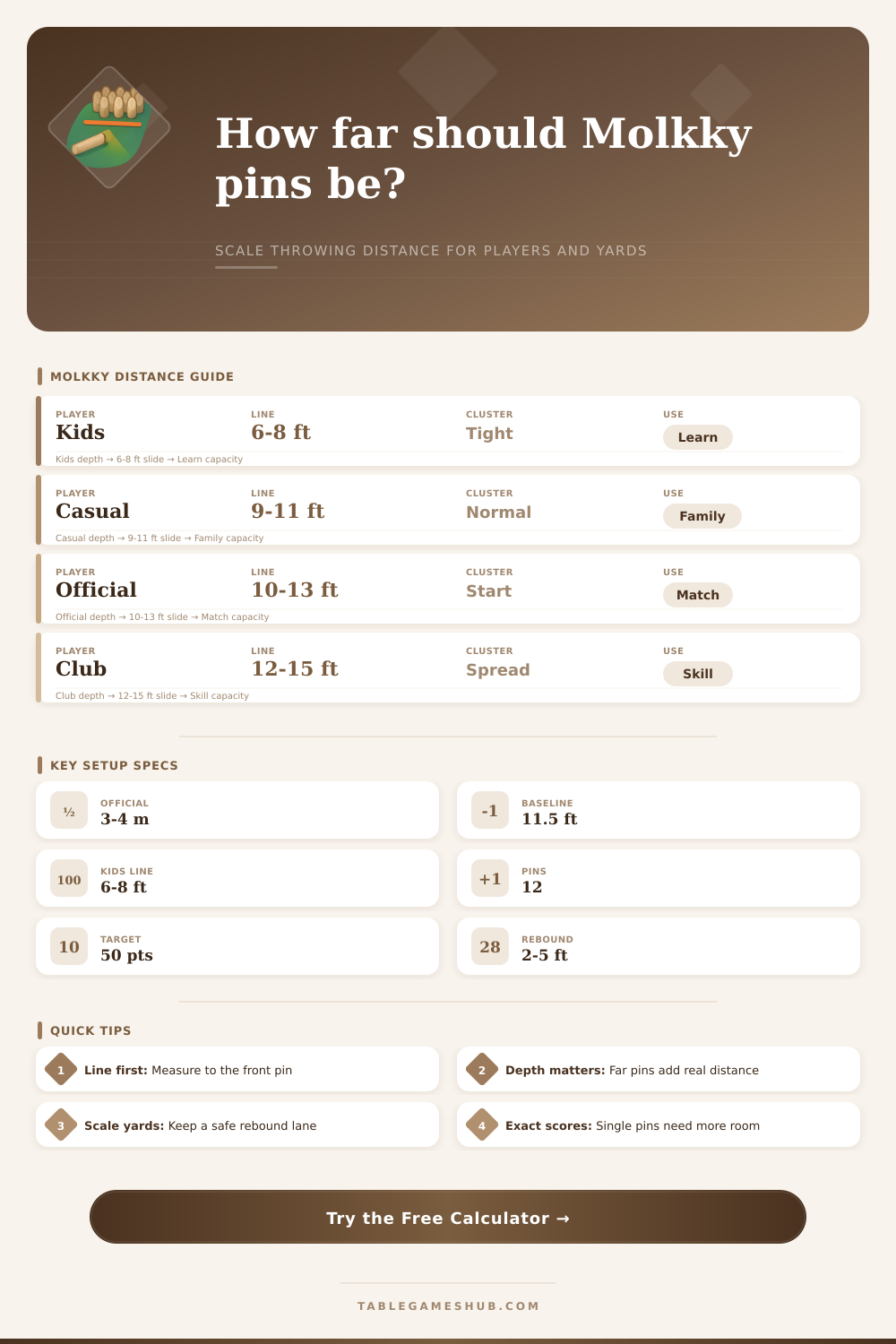
Set the throwing line to the pins, adjust for player age and skill, account for cluster depth, and check backyard rebound room.
| Player Profile | Suggested Line | Skill Goal | Best Use |
|---|---|---|---|
| Kids practice | 6 to 8 ft | Contact and confidence | Small yards and short turns |
| Youth family play | 8 to 10 ft | Consistent middle hits | Mixed ages |
| Adult casual | 10 to 12.5 ft | Standard opening feel | Home play |
| Club or tournament | 11.5 to 15 ft | Controlled single pins | Practice and match warmups |
| Pin Cluster Depth | Distance Effect | Target Method | Calculator Use |
|---|---|---|---|
| 0.8 to 1.8 ft | Opening cluster | Aim through center | Uses half depth for middle targets |
| 2 to 5 ft | Early scatter | Choose front or far pin | Adds target depth to line |
| 5 to 10 ft | Spread group | Favor single numbers | Increases precision rating |
| 10 ft or more | Long chase | Reduce line if yard is short | Backyard cap may limit line |
| Scoring Target | Target Depth | Distance Need | Setup Note |
|---|---|---|---|
| Several pins | Front third | Shorter line works | Best for learning and resets |
| Middle cluster | Half cluster depth | Balanced distance | Default casual target |
| Single numbered pin | Near chosen pin | Needs more control | Give extra rebound room |
| Exact 50 single | Farther precision line | Highest control | Longer line only if safe |
| Backyard Space | Recommended Scale | Rebound Zone | Distance Choice |
|---|---|---|---|
| 12 to 16 ft lane | 60 to 75 percent | 2 to 3 ft | Short junior or tight yard line |
| 17 to 22 ft lane | 75 to 95 percent | 3 to 4 ft | Casual family line |
| 23 to 30 ft lane | 95 to 115 percent | 4 to 6 ft | Official opening distance |
| 30 ft or more | 115 percent plus | 5 ft or more | Club scatter and single-pin work |
Tip 1: Measure to the front pin
The line-to-pin number should start at the throwing line and stop at the nearest standing pin. The calculator then adds cluster depth for the actual scoring target.
Tip 2: Preserve rebound space
If the yard is tight, shorten the throwing line before reducing the rebound zone. Fallen pins need room to settle where they land.
Molkky’s throwing distance are from the throwing line to the pins. Throwing distance will determine how much space the player will need for the game. Most people will set a certain throwing distance for the game, but that distance will have to change given the players or the yard’s condition will changes.
The throwing distance should be designed to give every player an fair throwing distance for each games. The distance from the players to the front pin is the starting point for measure the throwing distance. However, once the pins fall, they will roll on the ground to create a target distance for the players.
Set the Right Throwing Distance for Molkky
The distance that the players will throw their pin to the middle of the pin cluster will be more different than the distance required to reach the front pin cluster. The throwing distance must account for the space that the pins will take up when they fall and roll on the ground. Using the calculator will provide the players with the appropriate distance by inputting the cluster dimension into the calculator.
You must take into account the age and skill level of the players when determining the ideal throwing distance for the game. Younger and new player will have less force behind there throws. The throwing distance should be shorter for younger and new players.
Experienced players can opt for a shorter distance since they want more precision in there throws. However, giving them a shorter distance may be unfair if their rebound zone are too small for them to master the game. The calculator will ask for the type of players, their age, and their skill level to calculate the ideal throwing distance.
The ground’s surface will also determine the distance that the pins will roll once they fall. If the ground features short grass or packed dirt, then the pins will roll less distance than on a deck or a patio. The rebound zone will have to be larger if the pins will roll farther on the ground.
The calculator will ask for the type of ground surface so that the players will know the space they need to allow for the pins to roll on the ground. The size of the backyard will determine the maximum length that the throwing distance and the rebound zone can reach. Even the largest backyards may not provide much space once the pins are factored in.
The longer distance that the players will have to throw the pins may result in the pins hitting the fence or flower bed in the yard. Providing a short throwing distance will work better than trying to protect the rebound zone for the pins if it is too small for the yard. These reference tables will provide an idea of the perfect throwing distance for the players given the various conditions.
These are not rules; however, they will provide a starting point for the players to compare their backyard condition to the reference tables. If the players’ throwing lane is in between two values, they can use the calculator to determine what would work for the players’ backyard. The most common mistake in setting up the throwing distance is only measuring the distance to the front pin.
The target range for the pins is deeper than the front pin. The other most common mistake is to ignore the rebound zone. If the pins do not have a place to fall on the ground, the players will have to start the round over.
Both of these mistake can be avoided when the person operates the footprint calculator for Molkky. A person’s skill level will impact what target they aim for in the game. Aiming for a group of pins will require a shorter throwing distance than aiming for one pin.
A player aiming for one pin will require more precision in there throws. The longer distance that a skilled player will use will give them more time to aim for one pin. The target mode on the calculator will adjust for the player’s throwing distance based on their target point of interest.
The throwing distance has to change when the players or the environment of the game changes. The distance that works for four adults on a lawn will not work for two childrens playing area. The calculator will allow people to adjust for these conditions.
Having the appropriate distance for the players, yard, and ground will allow people to enjoy the games without any arguments.