
Slackline Tension Calculator
Estimate line force from span, sag, user weight, dynamic loading, line angle, pretension, webbing stretch, and anchor height.
| Span Style | Example Span | Typical Loaded Sag | Approx Angle | Mechanics Note |
|---|---|---|---|---|
| Short backyard line | 15–30 ft | 10–24 in | 6–10° | Often governed by comfort and ground clearance. |
| Park learning line | 30–50 ft | 18–36 in | 5–8° | Small sag changes noticeably affect tension. |
| Longer low line | 50–90 ft | 36–72 in | 5–8° | Stretch and anchor height become more visible. |
| Soft beginner line | 20–45 ft | 24–48 in | 8–14° | Higher angle lowers force for the same body load. |
| Angle Above Horizontal | Tension Multiplier | Meaning for 1x Body Load | Sag Character | Calculation Cue |
|---|---|---|---|---|
| 3° | 9.57x | Very high line force | Very shallow | 1 / (2 sin 3°) |
| 5° | 5.74x | High line force | Shallow | 1 / (2 sin 5°) |
| 8° | 3.59x | Moderate line force | Moderate sag | 1 / (2 sin 8°) |
| 12° | 2.40x | Lower line force | Deep sag | 1 / (2 sin 12°) |
| Webbing Profile | Approx Stretch at 1 kN | Feel Underfoot | Common Span Use | Calculator Setting |
|---|---|---|---|---|
| Low-stretch narrow webbing | 1.5–3% | Direct and firm | Longer precise lines | 2.0% |
| Standard recreational webbing | 3–5% | Balanced response | General park setups | 4.0% |
| Trickline style webbing | 6–10% | Elastic and lively | Dynamic movement | 8.0% |
| Soft beginner arrangement | 4–7% | Forgiving bounce | Short low lines | 5.5% |
| Load Scenario | Dynamic Factor | Input Use | Result Effect | Geometry Sensitivity |
|---|---|---|---|---|
| Standing still | 1.0x | Quiet balance | Lowest calculated load | Mostly sag and angle |
| Walking corrections | 1.2–1.5x | Typical movement | Moderate increase | Angle still dominates |
| Small bounce | 1.6–2.2x | Active practice | Force rises quickly | Sag and stretch interact |
| Abrupt load | 2.3x+ | Conservative check | Largest force estimate | Low angle can dominate |
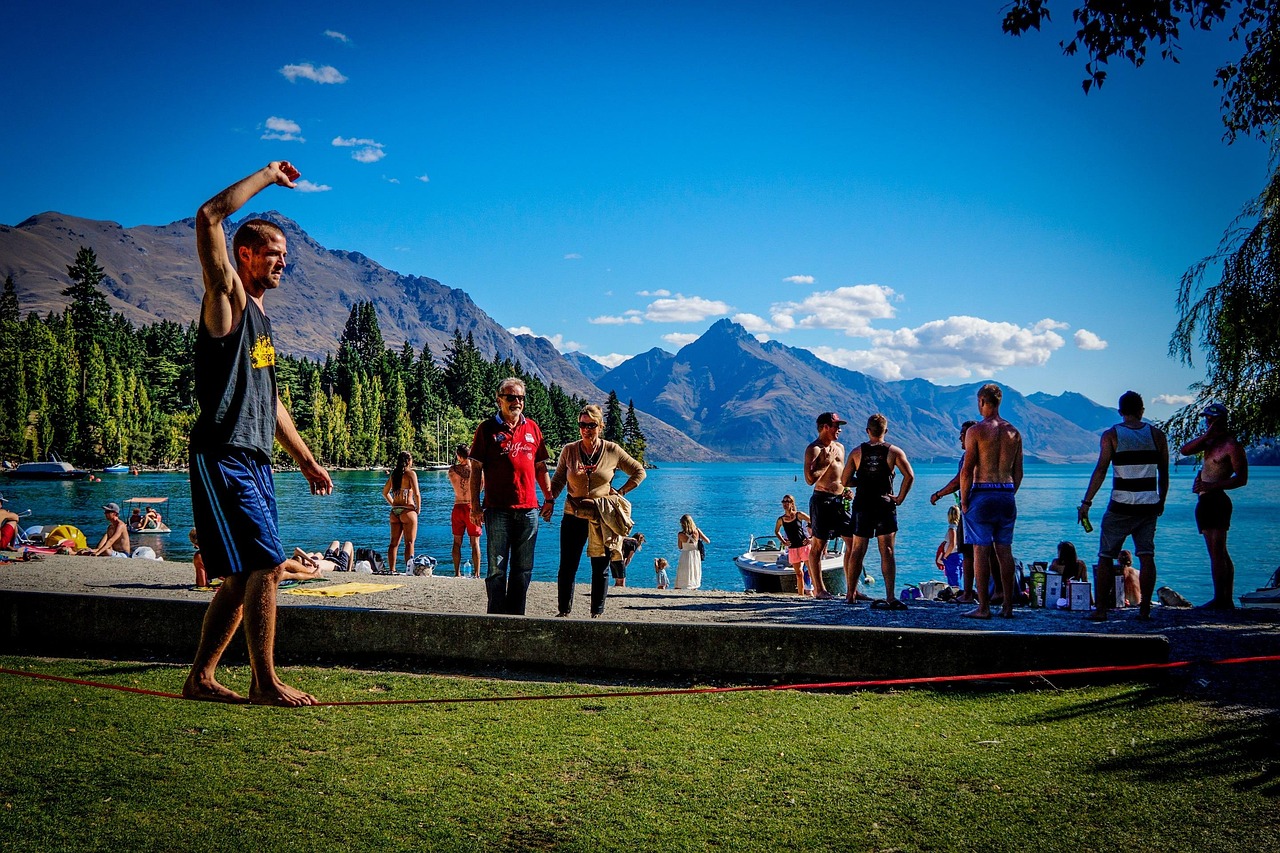
When rigging a slackline, a person must understanding the relationship between the tension and sag of the slacklines. Many people believe that a flat slackline is easier to walk on because it feels more stably. However, a flat slackline is harder to walk on because a flat slackline put more tension on the slackline.
If a person decrease the sag of the slackline, the tension within that slackline will increase. Conversely, if a person increases the sag of the slackline, the tension within that slackline will decrease. Thus, a slight increase in the sag of the slackline will lead to a mass drop in the actual force being applied to the slacklines anchors.
How Tension and Sag Affect Slackline Safety
A person should never use the feeling of the slackline to determine the tension within the slackline. The tension within the slackline can be calculated with a simple trigonometric equation that determine the angle of the slackline relative to the horizon. If the angle of the slackline is shallow, the tension within the slackline will increase.
In order to determine the tension within a slackline, a person should use a calculator to calculate the sine of the angle of the slackline. It is difficult to calculate the sine of an angle in ones head. Using a calculator to determine the tension within the slackline transforms the setup of the slackline into a science experiment instead of a guessing game.

Another important factor to consider when rigging a slackline is the dynamic load that the slackline will be under. The static load of a slackline is the weight of the person standing still on the slackline. The dynamic load of the slackline is the extra force created by a person when they walk, jump or perform tricklines on the slackline.
If a person plans on performing tricklines on a slackline, the dynamic load that those tricks create will increase the tension of the slackline. This additional tension can double or even triple the force exert on the slackline. It is important for a person to take into account the dynamic load that the tricks will create when they are performed on the slackline.
The type of webbing that is used for a slackline can impact how the slackline will function. Polyesters are the standard webbing for slacklines. Other types of webbing that may be used for slacklines have high stretch in the slackline.
Webbing with high stretch is useful for trickline slacklines. For slacklines where a person does not want as much give in the slackline, low stretch webbing is used. Slacklines can be rigged with webbing with high stretch or low stretch.
The percentage of stretch that the webbing can take will determine how much the webbing will stretch. Furthermore, the percentage of stretch will impact how the webbing absorbs the tension of the slackline. The more a slacklines webbing can stretch, the more force that will be used to elongate the webbing.
Therefore, the more a slacklines webbing will stretch, the lower the midpoint of the slackline will be to the ground. The clearance of a slackline is the distance from the slackline to the ground. Every individual who rigs a slackline must consider this distance.
Even if a person rigs a slackline so that the slackline is very taut such that the sag of the slackline is very low when no one is on the slackline, the slackline will have some sag when a person is standing on it. If the sag of the slackline while loaded with a persons body weight come too close to the ground, there will be little clearance between the slackline and the ground. In rigging a slackline, a person must factor in the height of the slacklines anchor points and the sag that the slacklines tension will create.
These factor will allow a person to correctly envision the clearance of the slackline. This understanding will allow a person to better perceive the risks and the feel of standing on the slackline. The relationship between the angle of the slackline and the tension of the slackline is not a linear one but an exponential curve.
A small change in the angle of the slackline can lead to a huge change in the tension that the slackline exerts on its anchor point. For example, if a slackline is rigged so that the angle of the slackline changes from three degree to eight degrees relative to the horizon, the tension that the slackline exerts on the anchor points will change. Because such a small change in the angle of the slackline results in such a huge change in the tension of the slackline, slackliners that has experience with rigging slacklines will often rig a slackline with more sag so that there is a wider safety margin for the slacklines hardware.
Pretension is the amount of force that is applied to the slackline prior to any person stepping on the slackline. If a person rigs a slackline such that all of the sag is remove from the slackline, the capacity of both the slackline webbing and the anchor points will be used up in the pretension of the slackline. It is important for the pretension of the slackline to be high enough to ensure that the slackline does not touch the ground when standing on it.
However, the pretension of the slackline also must be low enough so that the tension of the slackline does not come within the safety limits of the slacklines hardware. The management of the tension and the force of gravity on the slackline is the primary goal for rigging a slackline. The relationship between the slacklines span and its sag allows a slackline rigging enthusiast to understand how to create a slackline that is more comfortable for a person to stand on while still remaining safe.
