Archery Arrow Speed Calculator
Normalize chrono readings, compare tune setups, and estimate retained speed from bow to target.
| Bow Style | Base Speed | Best Use | Note |
|---|---|---|---|
| Compound | 330 fps | Hunting | High let-off |
| Recurve | 220 fps | Target | Clean release |
| Barebow | 205 fps | Indoor | Heavier arrows |
| Longbow | 180 fps | Field | Lower drag |
| Arrow Mass | Speed Band | Feel | Use |
|---|---|---|---|
| 350 gr | Fast | Snappy | Target |
| 400 gr | Balanced | Stable | Field |
| 450 gr | Moderate | Calm | 3D |
| 500 gr | Slower | Smooth | Indoor |
| Drag Profile | Correction | Best Fletch | Wind |
|---|---|---|---|
| Low | Minimal | Small vane | Calm |
| Balanced | Moderate | Standard vane | Light |
| High | Strong | Large vane | Blustery |
| Mixed | Variable | Hybrid | Changing |
Arrow speed are an essential measurement in archery as it determine how arrows will travel to the target. Many person use a chronograph to measure the speed of there arrows. A chronograph measure the velocity of the arrow at a specific distance from an archer.
However, the speed reading on a chronograph dont provide an accurate measurement of the arrow’s speed as the arrow will lose some of its speed due to drag from the air and the arrow’s distance from the archer. These variable must be accounted for to compare the speed of arrows from different bow or arrows. If you change the distance from which the chronograph measure the arrow’s speed, the reading will change.
How to Measure Arrow Speed
If you change the arrow’s mass, the arrow speed will also change. The style of the archer’s bow will also determine the arrow speed. Compound bow will produce the highest speed for the arrow.
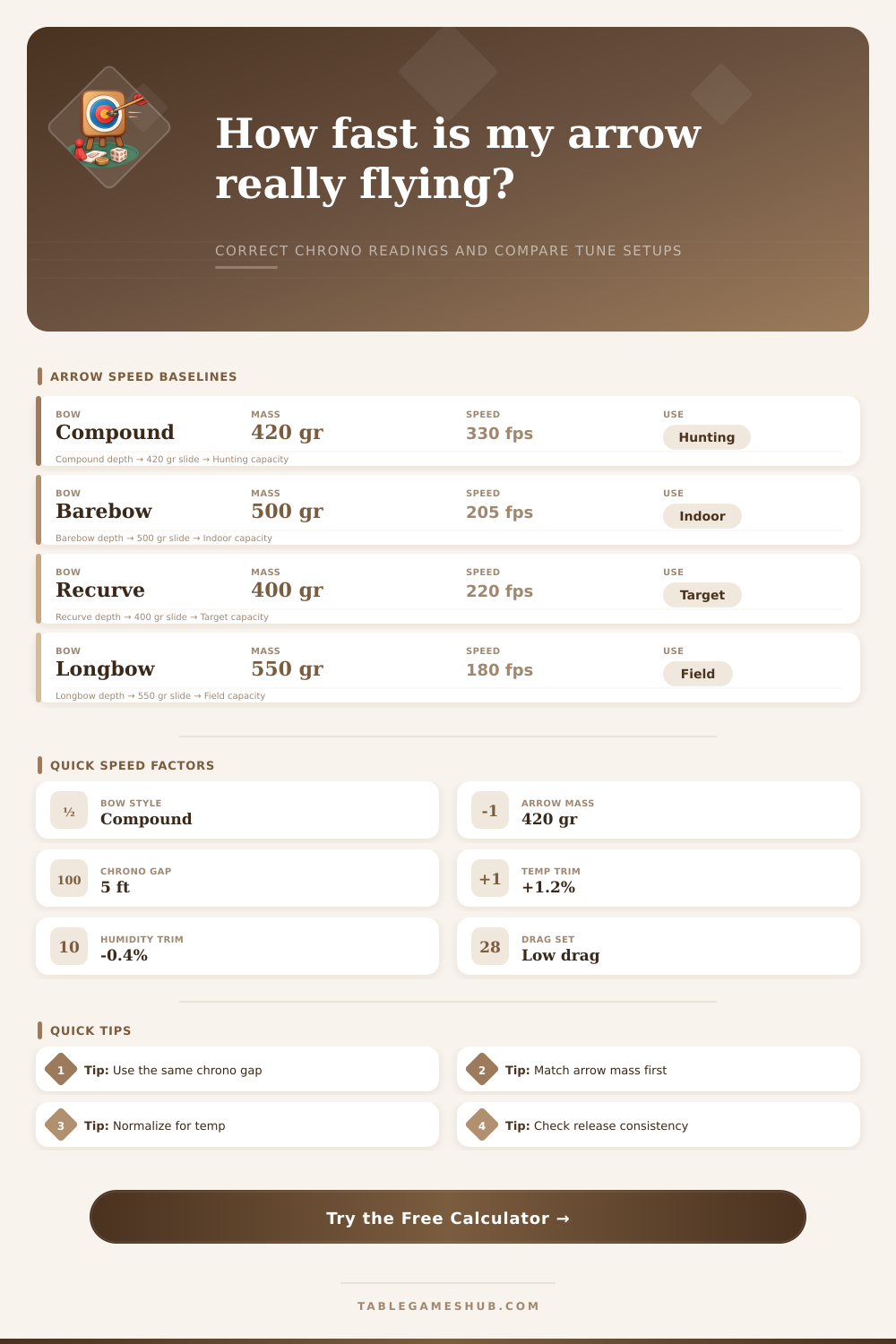
A compound bow can reach speeds of 330 feet per second with a 420-grain arrow. Recurve and bare bows will produce less arrow speed. Recurve and bare bows produce speeds of 220 feet per second or less with arrows of similar mass.
Finally, long bows will produce the least amount of arrow speed at around 180 feet per second. The mass of the arrow will impact the arrow speed. If you use heavier arrows, the arrow will have more stability and energy behind it when it are released, however, the arrow will travel at a lower speed.
The speed of the arrow will decrease by 1 foot per second for every 10 grain of arrow mass. Therefore, a 350-grain arrow will travel at a higher rate then a 500-grain arrow. The longer the arrow shaft and the weight of the arrow point will also impact arrow speed.
The longer shaft add to the mass of the arrow’s point, and the weight of the arrow point will affect how straight the arrow will travel through the air. External factors will change the arrow speed that is measure. Hotter air will allow the arrow to travel faster than in colder air.
Additionally, the humidity will also change the arrow speed as humid air is denser then dry air. The wind is something that an archer cannot control, but an archer can control the fletching of the arrow. If the arrow has a low-drag fletching it will travel at a higher speed in calm weather however if the fletching is high-drag it will be able to fight against the wind at long distance.
When measuring the arrow speed there are some common mistake to avoid. Using very light arrows to try to achieve higher speed will result in the arrow being unstable in the wind. If you measure the arrow speed at 3 feet from the archer one day but 8 feet from the archer the next the measurement will not be comparable.
Additionally, if the archer have an inconsistent release with the bow the arrow will travel at different speed and it will be difficult to properly tune the archers bow. Tuning the archer’s bow involves measuring the arrow speed of the different bow and arrows. For instance, an archer can measure the arrow speed of a compound bow with a 420-grain arrow.
Then use a heavier point on the arrow to increase the arrow’s penetration into the target. By doing this, the arrow speed will decrease. The archer can determine if the added mass of the point provide enough energy to the arrow to justify the decrease in arrow speed.
By using normalized arrow speed reading it is possible to determine the cause of the arrow speed changes. Are they caused by the equipment used or the environment in which the archer was shooting the arrow? By using normalized arrow speed the archer can focus on bow tuning rather than the noise create by the changing environmental factor.