⚔️ D&D Initiative Calculator
Track, roll, and sort initiative for D&D 5e combatants — with Alert feat, tie-breaking, and probability mode
Mark combatants as "surprised". Surprised creatures cannot move or take actions on their first turn and cannot take reactions until that turn ends. The Alert feat prevents surprise.
🎲 Initiative Probability Calculator
📊 Probability Table — Beat a Target Initiative
📖 DEX Score to Initiative Bonus Reference
| DEX Score | Modifier | Example | Initiative Bonus |
|---|---|---|---|
| 1 | -5 | Slow Undead | -5 |
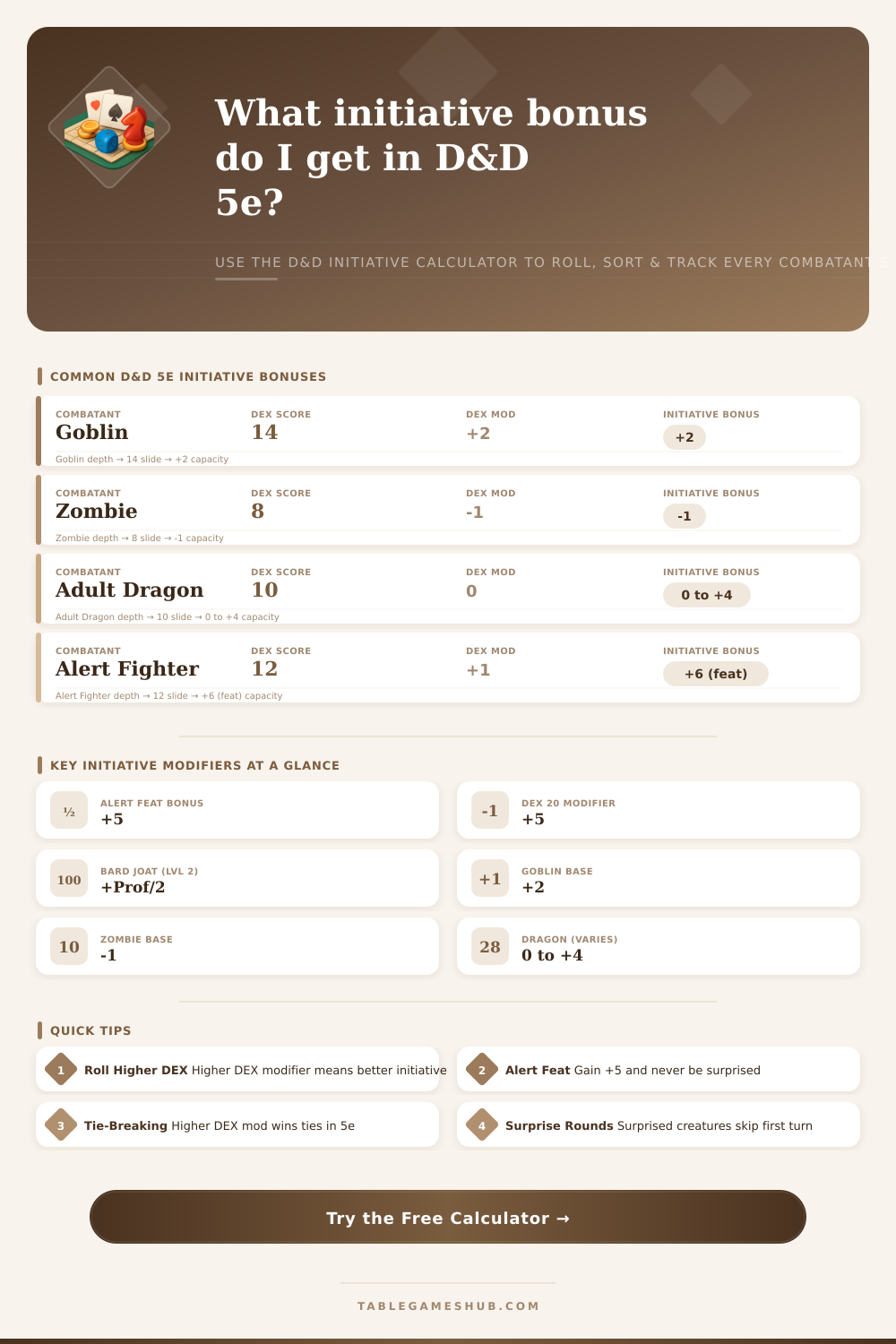
| 6-7 | -2 | Zombie | -2 (base) |
| 8-9 | -1 | Heavy Armor Fighter | -1 |
| 10-11 | +0 | Commoner, Dragon (some) | +0 |
| 12-13 | +1 | Average Adventurer | +1 |
| 14-15 | +2 | Goblin, Scout | +2 |
| 16-17 | +3 | Monk, Ranger | +3 |
| 18-19 | +4 | High Elf | +4 |
| 20 | +5 | Max DEX Rogue | +5 |
| 20 + Alert | +5 | Alert Feat | +10 |
🐉 Common Monster Initiative Bonuses
| Monster | DEX Mod | Extra | Typical Initiative |
|---|---|---|---|
| Goblin | +2 | — | +2 |
| Zombie | -2 | — | -2 |
| Skeleton | +2 | — | +2 |
| Bandit | +1 | — | +1 |
| Troll | -1 | — | -1 |
| Owlbear | +1 | — | +1 |
| Young Dragon | +0 | — | +0 |
| Adult Red Dragon | +0 | — | +0 |
| Ancient Dragon | +4 | — | +4 |
| Lich | +3 | — | +3 |
The Alert feat (+5) is the single best initiative boost in 5e. Combined with high DEX, a Rogue or Fighter can reliably go first in most encounters. Bards also benefit from Jack of All Trades, which adds half proficiency bonus to initiative checks.
When two combatants have the same initiative total, the one with the higher DEX modifier goes first. If DEX modifiers are also equal, the DM decides — often by rolling off or having players go before monsters. The optional 2024 Heroic Chronology rule always places player characters before monsters on equal initiative counts.
In Dungeons & Dragons, initiative is the first roll in every combat encounter and it gives the rhythm for the whole fight. When players “roll for initiative”, that sets the order of the actions of players and monsters. At the start of fight, every participant rolls a d20 and adds his initiative modifier: the Dexterity modifier plus any other bonuses.
Later the players act in order, counting down from the highest result to the lowest.
How Initiative Works in D&D 5th Edition
D&D 5th Edition uses turn-based combat with rules for help you find your place during fight. Initiative is simply the way that 5E asks players sort their turns. For most creatures, the initiative modifier matches their Dexterity.
If that modifier is under zero, it becomes negative, and that number is subtrahcted from the d20 roll.
There are several ways to boost initiative. A +5 bonus to initiative exists through some features. The Harengon race adds his proficiency to initiative, and the Alert feat also gives proficiency.
War Mages can add his Intelligence modifier, while Gloomstalker Rangers add his Wisdom modifier. Bards and Champion fighters receive half of his proficiency bonus (rounded up) on ability checks that they are not proficient with. Paladin of the Oath of the Watchers can add his proficiency bonus to initiative through an aura ability at level seven.
At high levels, the highest possible initiative could reach 44 with natural 20 roll and +24 modifier.
Some groups use side initiative, where you do only one roll for whole faction. When comes the turn of that side, its members can act in any order that they choose. Usually act players, later allies, and ultimately enemies.
This lets players do their thing all at once, which occasionally feels smoother. In games, where subclasses and feats give particular initiative bonuses, players commonly dislike group initiative. But in OSR-inspired games as Shadowdark, players mostly are glad about it.
Since approximately the 3rd edition, D&D combat became basically a tiny tactical war game. Occasionally it can feel stressful, when initiative inhibits the group work as unit. For instance, if the melee rogue acts before the tank, the rogue could be forced in the center of melee opponents or simply waste his turn.
Tools help with all this. Encounter tracking sheets can carry lists of initiative, HP of monsters, conditions, focus and passive scores. DnDBeyond have initiative tracker, where the DM creates campaign and players create characters.
Virtual tables let players run combat encounters and track initiative directly on maps. Even something as simple as Google Keep with checkbox list operates for track names and initiative numbers. Also pre-roll fights in notebook before the session is another useful approach.