♠ Spades Score Calculator
Track bids, tricks, bags & team totals across every hand — for 2–6 players
♠ Team A / North-South
♥ Team B / East-West
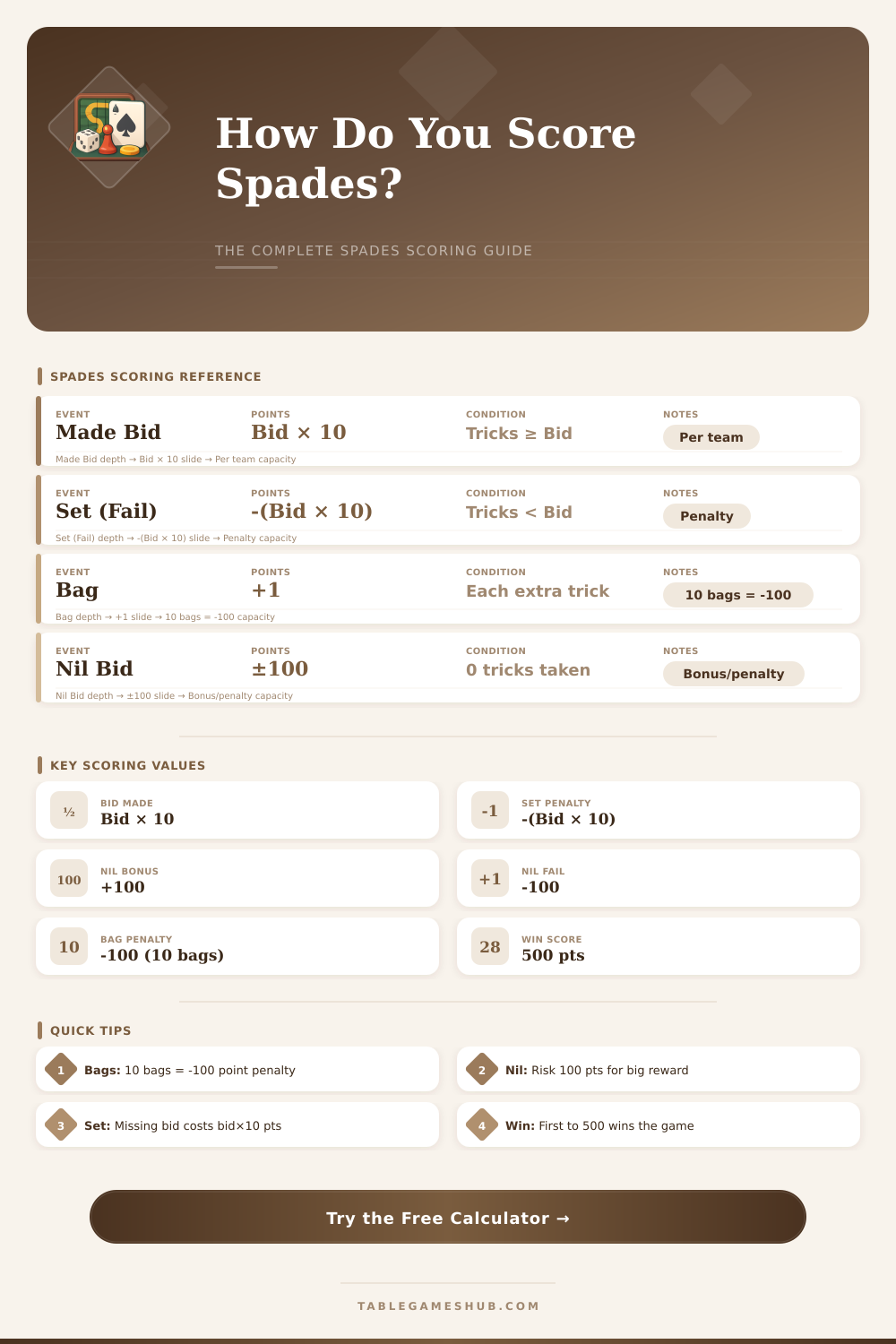
| Event | Standard Score | Strict Score | Condition |
|---|---|---|---|
| Bid Made | Bid × 10 pts | Bid × 10 pts | Tricks taken ≥ Bid |
| Set (Failed Bid) | −(Bid × 10) pts | −(Bid × 10) pts | Tricks taken < Bid |
| Overtrick (Bag) | +1 pt each | +1 pt each | Extra tricks beyond bid |
| 10-Bag Penalty | −100 pts | −100 pts | Accumulate 10 bags |
| 5-Bag Penalty (Strict) | N/A | −50 pts | Accumulate 5 bags |
| Nil Bid – Success | +100 pts | +100 pts | Player takes 0 tricks |
| Nil Bid – Fail | −100 pts | −100 pts | Player takes ≥1 trick |
| Blind Nil – Success | +200 pts | +200 pts | Bid blind, take 0 tricks |
| Blind Nil – Fail | −200 pts | −200 pts | Bid blind, take ≥1 trick |
| Boston (All 13) | Optional bonus | +200 pts | Team takes all 13 tricks |
| Variant | Players | Teams | Win Score | Avg Hands | Est. Duration |
|---|---|---|---|---|---|
| Standard Partners | 4 | 2 (pairs) | 500 pts | 8–12 | 45–90 min |
| Cutthroat | 3 | None (solo) | 500 pts | 10–15 | 60–100 min |
| 6-Player Teams | 6 | 3 (pairs) | 500 pts | 8–12 | 60–120 min |
| Solo / 2-Player | 2 | None | 500 pts | 10–18 | 30–60 min |
| Tournament (Short) | 4 | 2 (pairs) | 300 pts | 4–8 | 25–50 min |
| High Stakes | 4 | 2 (pairs) | 700 pts | 12–18 | 90–150 min |
| Bid | Tricks Made | Hand Score | Bags Earned | Result |
|---|---|---|---|---|
| 3 | 3 | +30 | 0 | Made bid |
| 3 | 4 | +31 | 1 | Made +1 bag |
| 3 | 2 | −30 | 0 | Set! |
| 4 | 4 | +40 | 0 | Made bid |
| 4 | 6 | +42 | 2 | Made +2 bags |
| 4 | 3 | −40 | 0 | Set! |
| 5 | 5 | +50 | 0 | Made bid |
| Nil | 0 | +100 | 0 | Nil success |
| Nil | 2 | −100 | 2* | Nil failed |
| Blind Nil | 0 | +200 | 0 | Blind nil success |
*Partner takes bags when nil player takes tricks in standard rules.
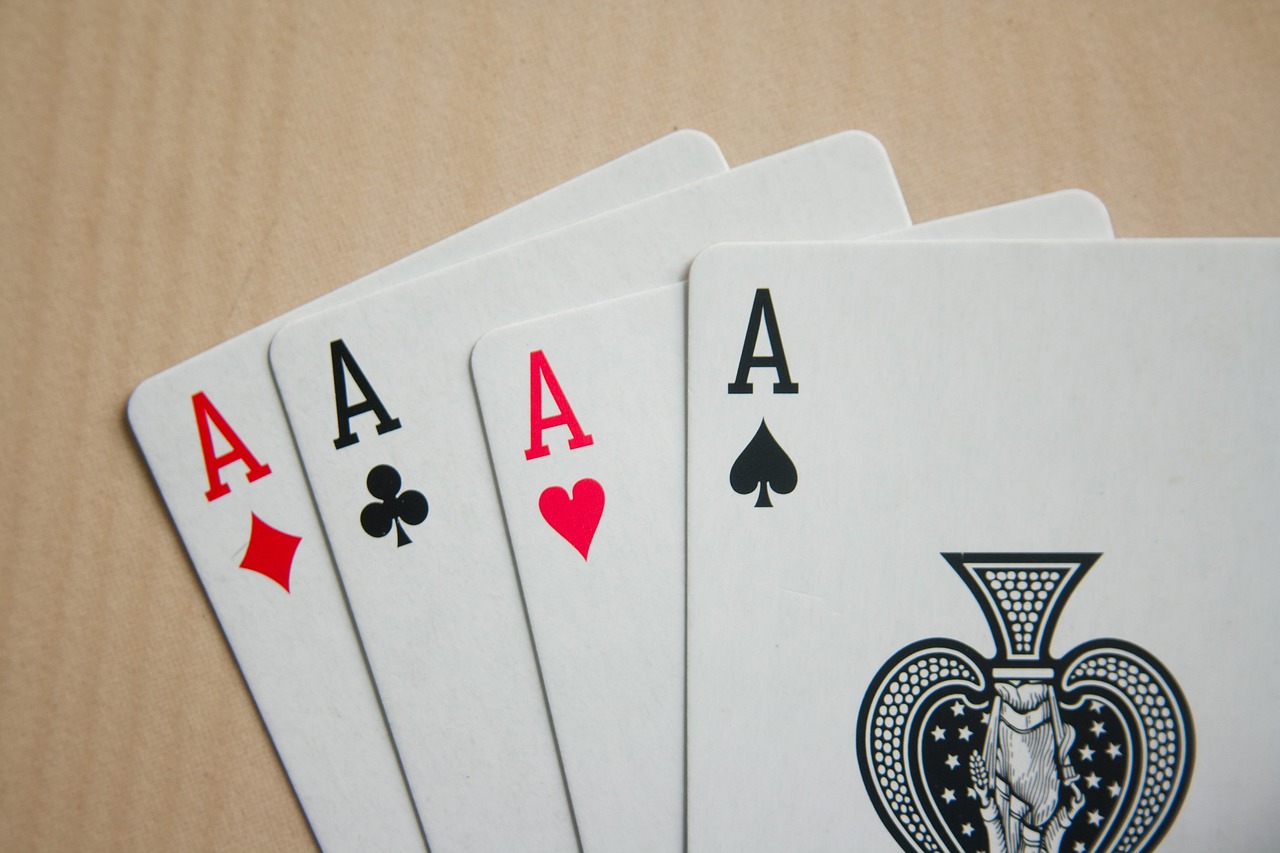
Spades are a card game, in that one takes tricks, and it requires four players split in two teams. Every player receives 13 dealt cards, and the game is made up of exactly 13 rounds. Here the point: Spades always are the trump suit, so any Spades card will beat cards from the three other suits, when one tries to seize a trick.
The rank of the cards goes from the Ace through King, Queen, Jack, then from 10 to 2 in falling order.
How to Play Spades and Count Points
The whole game turns mostly around the bid. Every player must make his bid. Passing simply is not allowed.
Because Spades work as the trump one does not choose another suit for trumps. Instead of mixing the cards, the teams first set the target for victory. Folks usually aim for 500 points, but for faster games one sometimes plays only until 200 or 300 points.
When the 13 tricks have been played, every team checks how many tricks it took, and compares that with its bid. When a team reaches or beats its bid number, it wins 10 points for each bid trick. For instance, if one bid 5 tricks and took at least 5, that gives 50 points directly.
Everything that beats the bid earns only one point per trcik. Those extra tricks are called bags, and honestly, they often hurt your team more than help.
Here is where the bags become weird: when one reaches ten bags, they do not simply add to the winning Score as usual. They actually punish you for bidding two little. That upsets some players, when some versions show bags as if they truly would be useful to beat, which is not the case.
The last number in your Score helps to track bags separate from the main points.
What happens if one fails the bid? So Spades. The penalty matches, whether one lacks one trick or even five, one loses 10 points for each bid.
Bid 6 and took only 5? Minus 60 points. Aimed for 10 and flopped?
Minus 100. A team can fully lose, if it reaches minus 200 points.
There is also something called nil bid. A good nil gives 50 points right away. But if it fails, one pays the price.
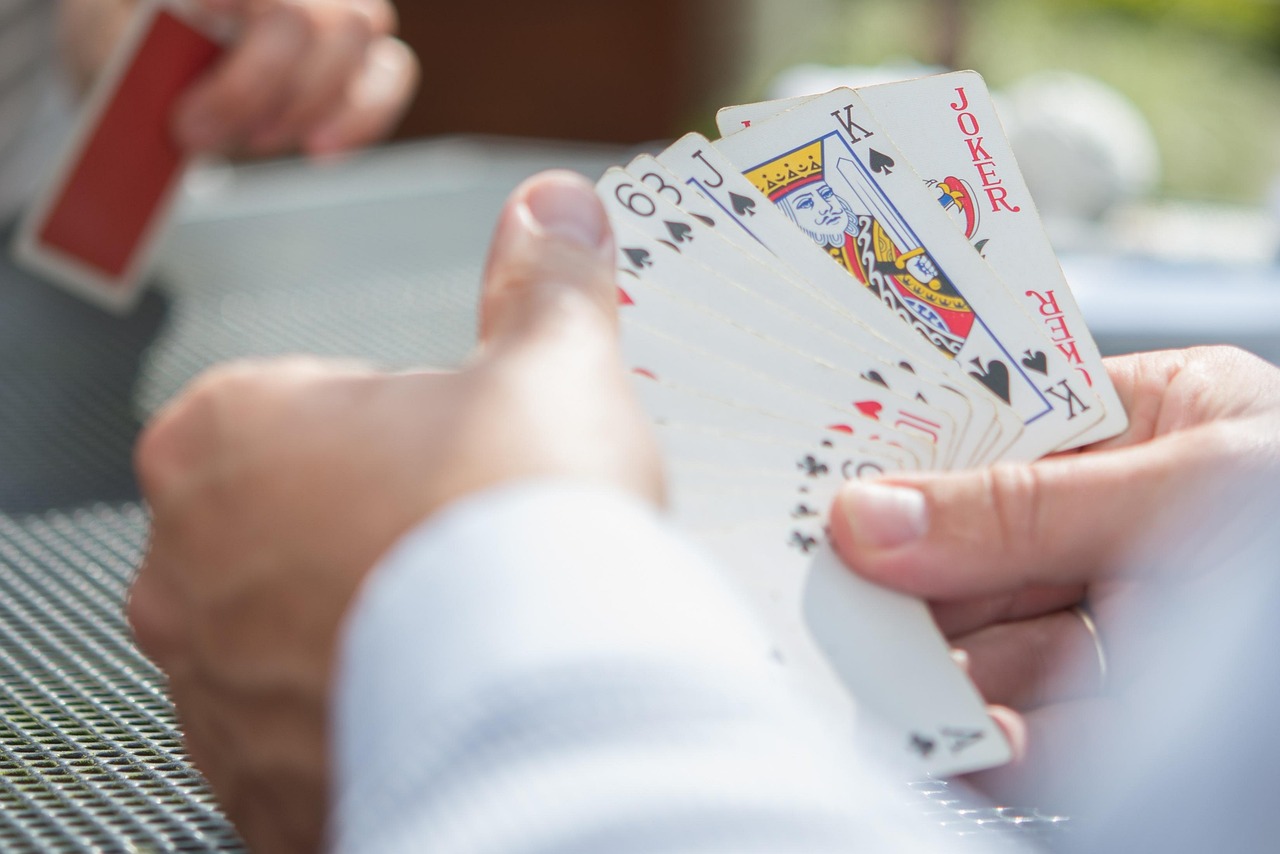
Bid nil when one already has a big lead is risky (not always wise tactics). Teams often lost big points because of failed nil.
If both teams pass 500 points in the same round, the team with the higher Score wins. Although bid-based scoring runs most games, some home games simplify things by only counting tricks, without any bid. That method leans more on luck than real skill.
Scoring by hands can get boring, so now there are apps that handle all math and let you switchbetween different rules. The game lasts hand after hand, until one team reaches the target.